Introduction
Bridge inspection is a critical part of infrastructure maintenance, ensuring the safety and longevity of roadways, railways, and pedestrian networks. Traditionally, inspections have relied on scaffolding, cranes, or rope access methods that are costly, time consuming, and potentially dangerous. Today, drone bridge inspection is revolutionizing the process by delivering safer, faster, and more cost-effective solutions.
What Is Drone Bridge Inspection?
Drone bridge inspection uses advanced unmanned aerial vehicles (UAVs) equipped with high-resolution cameras, LiDAR sensors, and thermal imaging to capture detailed data on bridge conditions. These drones can reach areas that are otherwise difficult or hazardous for human inspectors, providing a comprehensive view of structural integrity without disrupting traffic flow.
Key Capabilities of Drones in Bridge Inspection:
High-Resolution Visual Imaging
Modern inspection drones are equipped with 4K and even 8K cameras capable of capturing crystal-clear images of bridge surfaces, joints, and components. Inspectors can zoom in on cracks, rust, or surface defects with pinpoint accuracy, reducing the risk of overlooking early warning signs.
Thermal and LiDAR Scanning
Beyond visual inspection, drones can carry thermal sensors to detect temperature variations that may indicate moisture ingress, delamination, or hidden corrosion. LiDAR scanning provides precise 3D mapping of bridge geometry, enabling engineers to monitor deformation or misalignment over time.
Access to Hard to Reach Areas
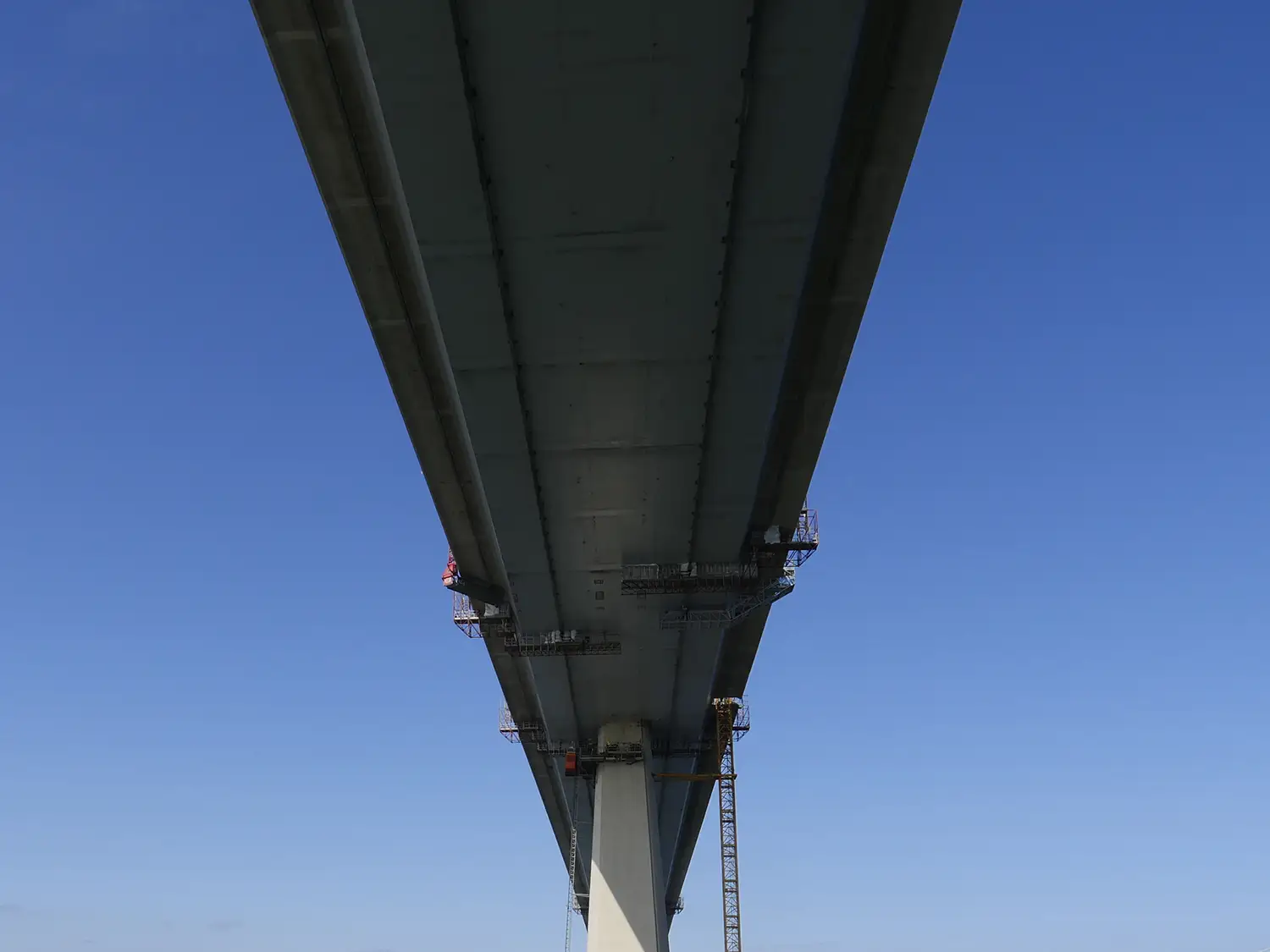
Drones can easily fly beneath decks, around suspension cables, and inside confined spaces, offering perspectives that would otherwise require costly equipment. This access minimizes the need for lane closures and eliminates many safety risks associated with working at height.
Real Time Data Collection and Reporting
With live streaming capabilities, inspectors can view drone footage in real time, make immediate assessments, and even guide pilots to focus on specific areas of concern. Cloud-based data storage and AI-powered analysis tools further streamline the reporting process, ensuring accurate and actionable insights.
Benefits of Drone Bridge Inspection:
Increased Safety
By reducing the need for inspectors to physically climb structures or work over busy highways, drones significantly lower the risk of accidents and injuries.
Cost Efficiency
Drone inspections reduce the reliance on heavy machinery, scaffolding, and prolonged traffic disruptions. This results in substantial cost savings for municipalities and contractors.
Time Savings
What once took days with traditional methods can often be completed in just a few hours using drones. Faster turnaround times mean quicker maintenance decisions and less disruption to road users.
Enhanced Accuracy and Documentation
Every drone mission generates a digital archive of images, video, and 3D models. This creates a valuable record for ongoing maintenance planning, comparison over time, and compliance with regulatory standards.
Conclusion
Drone bridge inspection is more than just a technological upgrade—it’s a safer, smarter, and more efficient way to protect critical infrastructure. With advanced imaging, LiDAR, and thermal scanning capabilities, drones provide engineers and government agencies with the actionable insights needed to maintain bridges effectively. As technology continues to evolve, UAVs will remain at the forefront of modern infrastructure management.