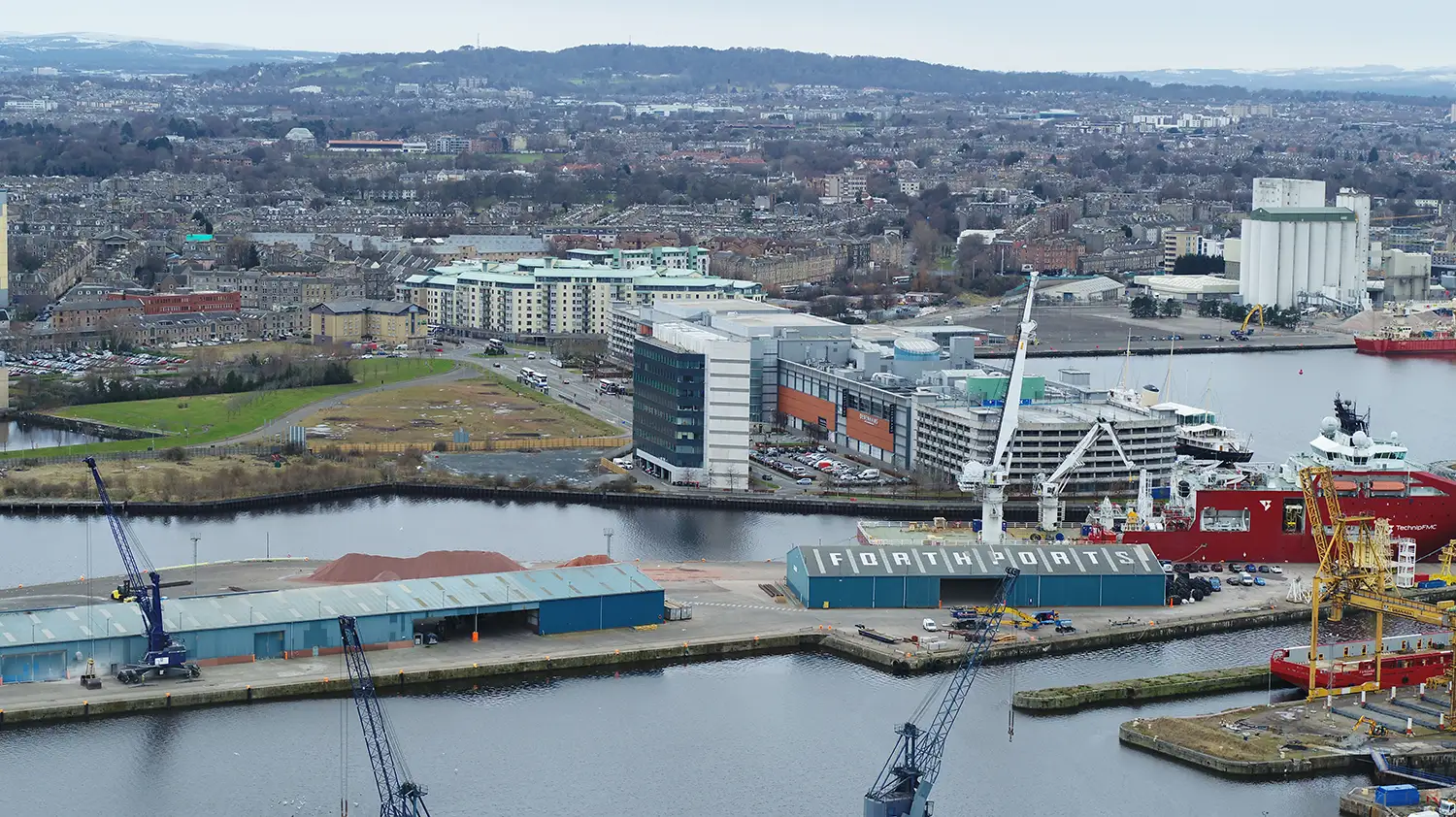
Port and Harbour Drone Services
Discover how our services can enhance efficiency, safety and security of operations
Transforming Port Operations with Drone Aerial Insights
Ports and harbours are the lifelines of global trade, and maintaining them efficiently is vital for safety, logistics, and growth. Drone services for ports and harbours offer a modern, cost-effective solution to monitor, inspect, and manage complex maritime environments. By providing rapid aerial perspectives, drones improve decision-making while reducing downtime and operational risks.
Why Choose Drone Inspections for Port Infrastructure
Traditional inspections of harbour walls, piers, jetties, and cranes are time consuming and often require shutting down equipment. With drones, inspections can be carried out quickly, safely, and without disruption to operations. High resolution cameras and thermal imaging allow for detecting cracks, corrosion, and structural weaknesses before they become critical issues. This proactive approach saves both time and money while enhancing safety compliance.
Drone Support for Offshore Wind Component Marshalling
Modern ports are increasingly used as staging hubs for offshore wind projects. Marshalling areas handle enormous structural components such as turbine blades, nacelles, towers, jackets, and monopiles. These oversized assets must be stored, transported, and lifted with precision, making safety and inspection critical. Drones provide a fast and reliable way to inspect storage yards, check lifting equipment, and monitor the condition of these high-value components. High-resolution aerial imaging helps detect surface damage, corrosion, or alignment issues before they escalate into costly delays. By reducing reliance on manual checks, drones improve safety for workers operating near heavy loads and ensure components remain in optimal condition until deployment offshore. Regular drone inspections also support project documentation and compliance. With detailed visual records, port operators and wind farm developers can maintain clear audit trails, demonstrate quality control, and avoid disputes with suppliers. For ports supporting the renewable energy sector, drone services deliver efficiency, safety, and confidence throughout the offshore wind marshalling process.
Storm Damage Assessment and Bathymetric Survey Support
Ports and harbours are vulnerable to extreme weather events, where storms can cause significant damage to breakwaters, seawalls, and quaysides. Rapid response is critical, and drones provide an immediate way to assess storm damage from the air. Aerial imaging allows operators to identify displaced materials, flooding impacts, and structural failures without putting inspection crews at risk in hazardous conditions. This fast overview helps prioritise repairs and restore operations more efficiently. In addition, drones can be integrated into bathymetric survey operations, supporting the monitoring of seabed conditions around harbour entrances and berthing areas. While specialised sonar equipment is still required for depth measurement, drones offer valuable aerial support by mapping surface conditions, guiding survey vessels, and providing a georeferenced overview of coastal changes. Combined with traditional hydrographic methods, drones improve accuracy, reduce survey times, and provide a complete picture of both above- and below-water conditions. By combining storm impact assessments with bathy survey support, drone services give ports a powerful tool to maintain safety, reduce downtime, and plan long-term resilience against climate and environmental challenges.
Enhancing Maritime Security with Drones
Security is a top priority in busy port environments. Drone in a Box solutions equipped with real time video and thermal sensors can perform routine patrols restricted zones, monitor vessel traffic, and detect unauthorised access via AI. Using aerial surveillance, port authorities can respond rapidly to threats, ensuring the harbour remains a safe and secure environment. Drone surveillance covers large external areas fast and provides 24/7 monitoring capabilities helping costly manned patrols to focus their patrol area.
Benefits of Port and Harbour Drone Services
The advantages of using drones in ports and harbours are clear:
- Reduced inspection costs and downtime
- Improved safety for workers and contractors
- Enhanced real-time monitoring of vessels and infrastructure
- Support for environmental sustainability initiatives
- Faster response times in emergencies
The Future of Drone Technology in Maritime Operations
As technology advances, drones will become an even more integral part of harbour management. From AI-powered analytics to autonomous inspection flights, the potential is vast. Ports that embrace drone services today are investing in greater efficiency, safety, and sustainability for the future.