Wind Turbine Blade Thermal Inspection
Rapid fault finding for structural cracks, delamination, and kissing bonds using themography
Thermal Imaging for Wind Turbine Blade Inspection: Detecting Structural Cracks, Delamination, and Kissing Bonds
As wind energy technology advances, maintaining the structural integrity of turbine blades is essential for safety, reliability, and maximum energy yield. Traditional visual inspections alone can miss hidden or subsurface faults that compromise performance. That’s where thermal imaging for wind turbine blade inspection provides a powerful advantage — offering non-destructive, precise, and data-rich insight into the true health of composite structures. At Sensoar.io, we use drone-mounted thermal cameras to perform detailed wind turbine blade inspections, detecting early-stage structural defects such as cracks, delamination, disbonding, and kissing bonds that are invisible to conventional optical methods.
How Thermal Imaging Detects Subsurface Faults
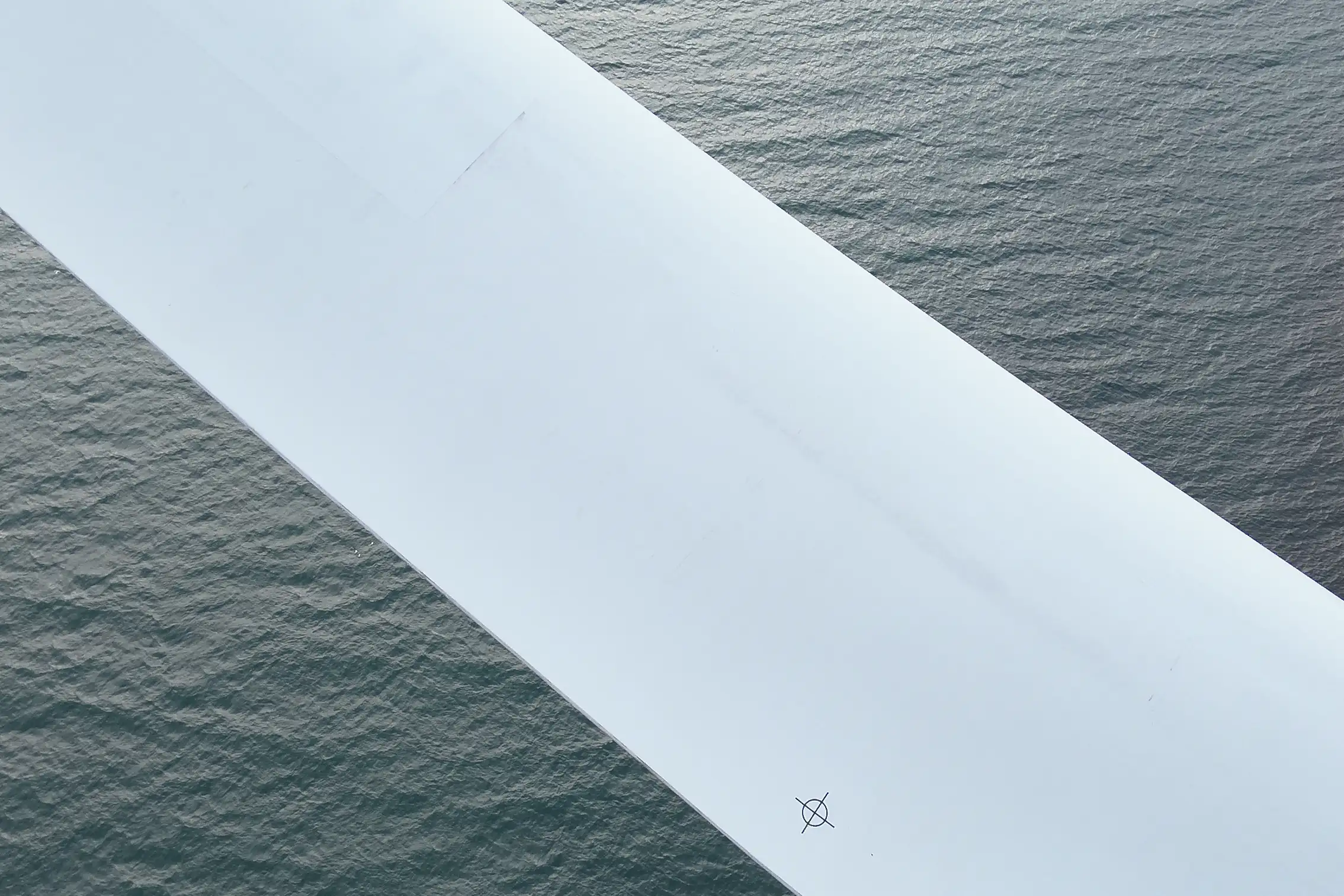
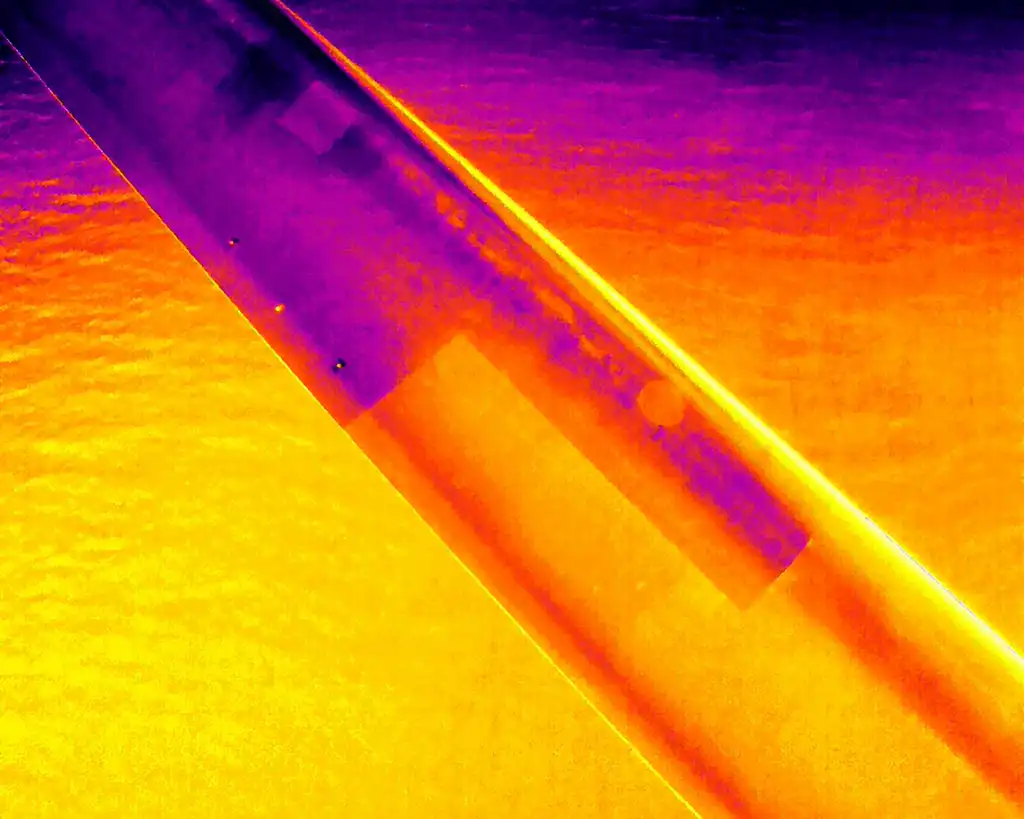
Wind turbine blade inspection — left: thermal image of wind turbine blade soon after stop showing wind turbine composite differences, a hidden panel repair and kissing bond, mid panel shows composite stress, right: visual image showing black lifting point sticker repair hidden. Drag slider to compare.
Modern wind turbine blades are made from complex composite materials typically fiberglass, carbon fiber, and resin laminates. These materials, while lightweight and strong, are prone to subtle manufacturing or fatigue-related issues over time.
Using infrared thermography, drones capture precise temperature differentials across the blade surface. When heat is applied naturally (from sunlight) or artificially (using controlled thermal excitation), variations in thermal conductivity reveal internal defects:
- Using infrared thermography, drones capture precise temperature differentials across the blade surface. When heat is applied naturally (from sunlight) or artificially (using controlled thermal excitation), variations in thermal conductivity reveal internal defects:
- Delamination between composite layers creates insulating air pockets detectable as cool spots
- Kissing bonds, areas where layers appear bonded but lack true adhesion, show minimal but measurable heat transfer anomalies
Because thermal imaging is non-contact and non-destructive, it can safely scan entire blades while turbines remain stationary or during short downtime periods, offering a fast and accurate assessment method.
Key Benefits of Drone-Based Thermal Blade Inspection
- Early Fault Detection: Thermal imaging identifies micro defects before they evolve into major structural failures. Detecting kissing bonds or subsurface cracks early allows maintenance teams to intervene before performance degradation occurs
- Reduced Downtime and Maintenance Costs: Drone thermography can inspect multiple turbines in a single session, minimizing costly manual inspections and reducing turbine downtime by up to 70%
- Enhanced Safety: Traditional rope access inspections pose significant safety risks. Drone-based thermal imaging removes the need for technicians to work at height or in adverse conditions
- High Accuracy and Repeatability: With advanced radiometric sensors, drones capture temperature data with millikelvin sensitivity, enabling precise identification of defect zones and allowing repeat inspections for trend analysis
- Comprehensive Structural Insight: When combined with high resolution visual imagery, thermal data offers a complete health overview of the blade surface and subsurface. This helps engineers make informed decisions about repairs, replacements, or continued operation.
Applications for Structural Integrity Monitoring
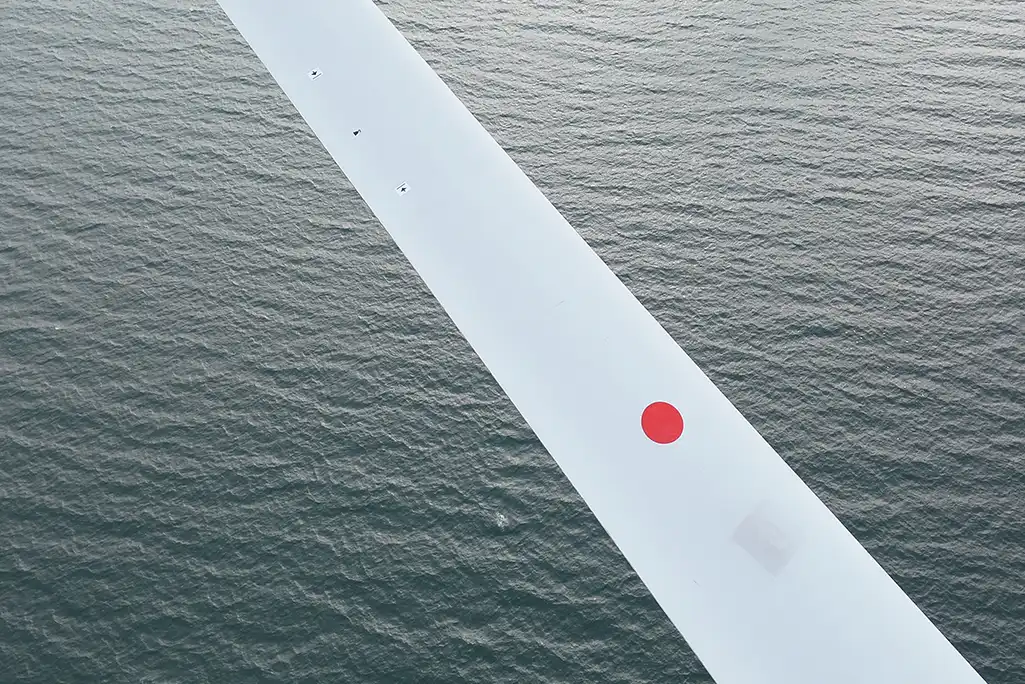
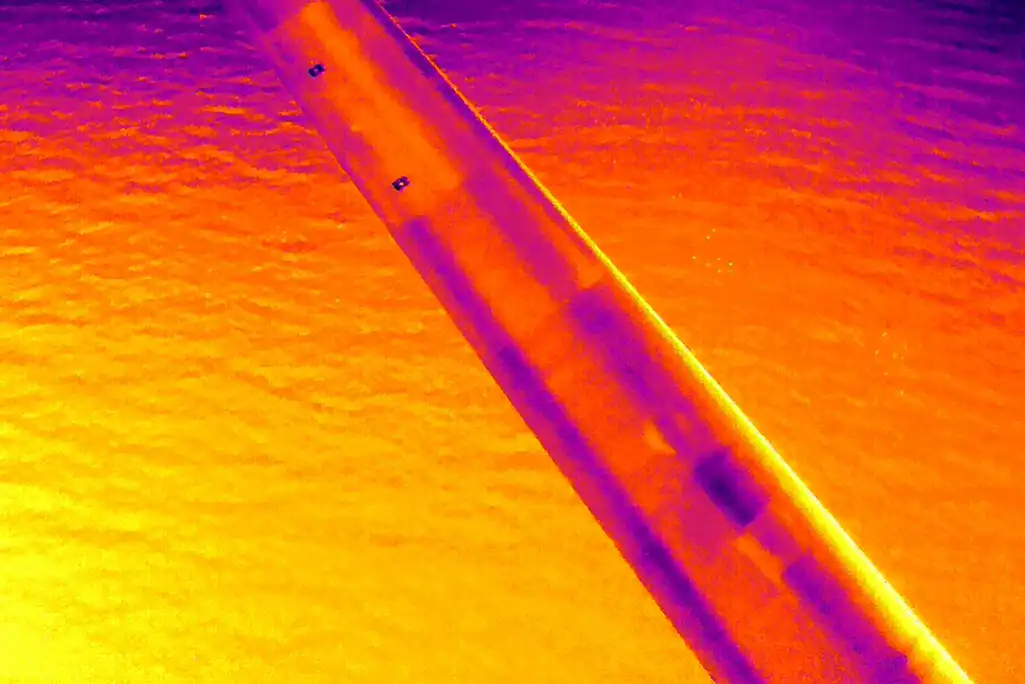
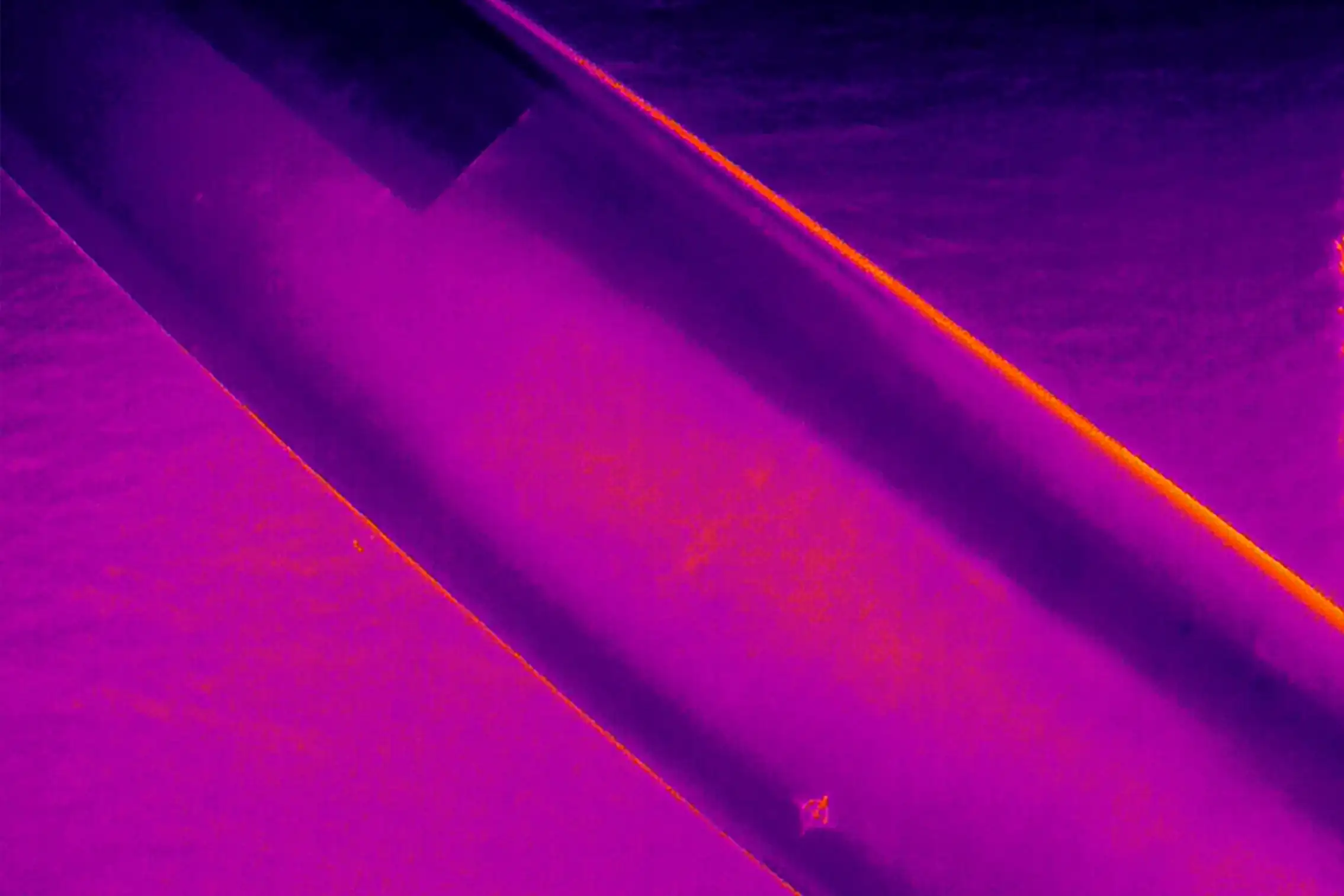
Wind turbine blade inspection — left: thermal image of wind turbine blade soon after stop showing wind turbine composite differences, a hidden panel repair and kissing bond, mid panel shows composite stress, right: visual image showing black lifting point sticker repair hidden. Drag slider to compare.
Thermal inspection is particularly effective for detecting: Cracks around bolt holes, bonding joints, and root sections Delamination near trailing or leading edges Resin-rich or resin-poor regions from manufacturing inconsistencies Water ingress and internal voids Kissing bonds within adhesive layers These faults, if undetected, can lead to aerodynamic inefficiencies, vibration, and catastrophic blade failure. With thermal imaging, such risks are mitigated through data driven preventive maintenance.
Why Choose Sensoar.io
Sensoar.io’s drone inspection teams are CAA certified and Bladena Structural blades qualified, ensuring precision data capture and professional analysis. Our inspection process integrates: Automated flight paths for consistent coverage and data accuracy High sensitivity thermal cameras optimized for composite inspection Post-processing analytics that correlate thermal anomalies with potential structural flaws Detailed inspection reports with geolocated defect mapping and repair recommendations We deliver actionable insights that empower asset managers to extend blade lifespan, optimize maintenance schedules, and prevent unscheduled outages.
In Summary
Thermal imaging has revolutionized wind turbine blade inspection, offering unmatched visibility into subsurface defects that threaten structural performance. By detecting cracks, delamination, and kissing bonds before they escalate, Sensoar.io’s drone-based thermal inspections provide a safer, faster, and more intelligent approach to renewable asset maintenance. Protect your investment, maximize uptime, and ensure long-term performance with thermal blade inspection by Sensoar.io.